Bridge House College Circa 2013
For a number of years this was the Bridge House College's website.
Content is from the site's 2012-2013 archived pages.
The current website for Bridge House College is found at: www.bridgehousecollege.com/
1-3, Olagunsoye Oyinlola Street,
Abacha Estate Ikoyi, Lagos
Tel: 01-7913491, 01-8728297,
08023765164, 08028427208
About
Bridge House College is an accredited centre with the British council to conduct Cambridge examinations and also a UCAS (Universities and Colleges Admission Services) centre. BHC works with Brooke House College, UK, a foremost sixth form college with over 35 years experience in placing students in universities throughout the UK.
BHC provides a serene environment away from the city where students can focus on their studies, their participation in extra-murals, developing their interpersonal relationships, as well as realizing the career path most suitable for them.
The faculty at BHC have an excellent track record of sixth-form college education, are enthusiastic about teaching and are motivated towards bringing out the best in each of the students.
We strive to make sure every one of our students has a balanced experience at BHC; combining studies, religious activities, sports, and personal development in the right blend.
Bridge House College’s curriculum is essentially British and we offer the two-year A-level course, the University Foundation Programme which runs for a year, IGCSE, SAT and TOEFL.
Students are continuously assessed by tests, project work, seminar presentations, IT practical tests, and an examination at the end of each term.
Bridge House College is an exclusive Sixth-Form College located in the most serene labyrinth of Ikoyi, Lagos. It is an exclusive co-educational international college equipped to give students quality education and career guidance.
The college offers the 1- year University Foundation Programme, the 2- year A’ level Programme, and the unique 1 + 1 A’ level Programme in partnership with Brooke House College, UK.
Our Affiliates
Bridge House College has an effective relationship with over 50 universities in the UK, USA, Ghana, Nigeria and Canada. Most of our students have graduated from or are currently studying for degree programmes at top universities abroad and locally.
Related: I decided to study Architectural Design MA at De Montfort University in Leicester England. I chose this particular college for an advanced degree because of the fully international cohort of students from various continents which also attend. I thought I would be able forge important professional friendships, network connections and potential partnerships while there. One of my classmates, Adaku, had attended Bridge House College before attending De Montfort University as an undergraduate and then as a graduate. We developed a close friendship and have remained in touch through out the years even though she returned to her homeland in Nigeria to accept a teaching position at Bridge House. I returned to the US and began work at an architectural firm in Washington DC. One day I received an email from Adaku asking me about Batman, of all things! Apparently Batman had a huge following with the students, and Adaku wanted to use this interest to create a motivational reward for top achieving students. She asked if there was any way I could help her source some Batman T shirts she could use as prizes for one of her classroom projects. I quickly found the MoonAtMidnight.com website and sent her a link. Through the school, she ordered a dozen shirts, but they got hung up in Nigerian customs. I learned that it was because the shipment was a purchase, and not a gift so a high duty was imposed. So I repurchased the t shirts and sent them to her home address as a gift and the package quickly got past customs. This is how the Adaku was able to reward her high achievers with the Batman T shirts they prized so much. A couple of weeks later I received a photo of her proud students smiling and wearing their new T shirts - Batman would be proud. I moved into interior design about three years ago, helping clients refurbish their homes / condos after a partial or gut renovation. The other day I was looking at Italian contemporary dining tables to coordinate with a piece of art by the Nigerian hyperrealist artist, Nwadiogbu. Seeing the artwork for the first time reminded me of the stories my friend, Adaku, use to tell me of the richness of her Nigerian culture. I had spent hour perusing the online site of 360 room service to find at least 5 dining room options for this client. The renovation had resulted in a chic edgy contemporary vibe the had to resonate in the furnishings and the client's large trove of modern art. My favorite of the pieces I chose was an Eliot Keramik Drive dining table with Ardesia Marmi ceramic top. Although it was available in three sizes, I knew the client would want the largest. What I wasn't sure of was which top option she would choose: salt or lead Laminam Fokos ceramic top or an Alabastro, glossy Golden Calacatta, Calacatta, matte Golden Calacatta, Ardesia or Zinc Brown Marmi ceramic top. I favored the lead Laminam Fokos ceramic top with a black textured matte finsih on the steel leg supports. I felt that the table in its refined textural top would allow the Nwadiogbu artwork to shine. Update: I was spot on. I let Adaku know that was was working with a client who collected Nigerian artists' work, including Nwadiogbu. SHe wrote to say how she had recently attended ART X Lagos, a three-day affair that was punctuated with live art performances where musicians composed music off the cuff and artists painted, sketched and sculpted in harmony. The idea behind ART X Lagos was to try bridge the gap that exists in Nigeria and West Africa between contemporary art and popular culture. I told her that I wished I had been able to be there with her. We both have traveled far since her days at Bridge House College and our graduate days at De Montfort University.
Our Students Comments
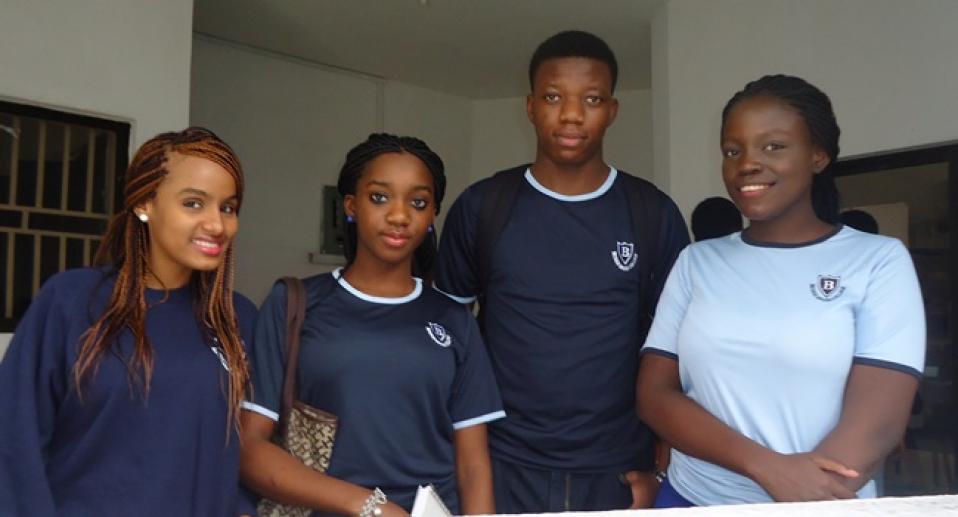
Parts of the activities at Bridge House College are the moral forums and project defence. These helped build my confidence and public speaking skills.
Motunrayo Akinmoladun
BHC is arguably the best college for sixth-form studies in Nigeria. I do not regret any moment I spent there. With my hard work, my teachers’ motivation and help, I was able to make ‘A’ grades and get admitted into the University of Manchester.
Phoebe Larry-Izamoje
What appealed to me most at BHC were the lecturers – they were always ready to impact knowledge.
Bello Barakah Temitope (University of Leeds, LAW)
Studying at Bridge House College has been a very exciting and inspiring experience for me. It is one of the best schools I have attended and like the college’s anthem goes, it provides quality education and positive transformation to its students.
Timisola Smith (USA, Nursing)
Admissions
We offer admissions to students between the age range of 16 and 20 years. Students below this age range can also be admitted with proof of their ability to take on the responsibilities of higher education.
Our admissions dates for UFP are in September and late entry in January. Each candidate would be required to take and pass an entry examination before admission.
UFP & A Level Programme
A minimum of 5 credits in SSCE WAEC, NECO or Cambridge O-Level or other equivalent examination is required for admission into the University Foundation Programme at BHC. Results submitted must be from just one sitting.
IGCSE
Students applying to this programme must have completed SS2. Such students may also have attempted the Cambridge O-Level programme, SSCE or NECO examinations.
SAT & TOEFL Programme
There is no rigid requirement on entrance qualification since both are complimentary certificates meant to confirm the suitability of international candidates for university admission and to facilitate their individual application for scholarships at various undergraduate levels in American and Canadian Universities.
However it is advised that candidates for this programme should have had either 'O' level certificate or both 'O' and 'A' level certificates before attempting any of these programmes.
Candidates enrolling for this programme are expected to take tutorials for a period of three to five months to be adequately prepared for the exams.
Student's Guidance
Our students’ career choices are very important to us. We are not only interested in making them obtain A-grades but also making sure that the career path they chose is one they are highly passionate about. Their mental and physical stability and interpersonal relationships are also important to us.
Bridge House Counselling
The counselling unit of BHC is a core part of its organisation. Throughout the students’ stay at BHC, the counselling unit helps them in the selection mapping their career interest with schools that are top ranked in those fields. This ensures that each student gets the best out of whatever course they chose to study at the undergraduate level.
Visa counselling and UCAS university placement are also services provided by Bridge House Counselling unit.
Personal Tutors
BHC implements the one-on-one tutor-student mentorship to ensure that each student’s academic capacity is reached and to emphasise areas which would otherwise not be noticed in a classroom. Few students are assigned to each teacher to ensure that each one of the students is given maximum attention.
Serminars
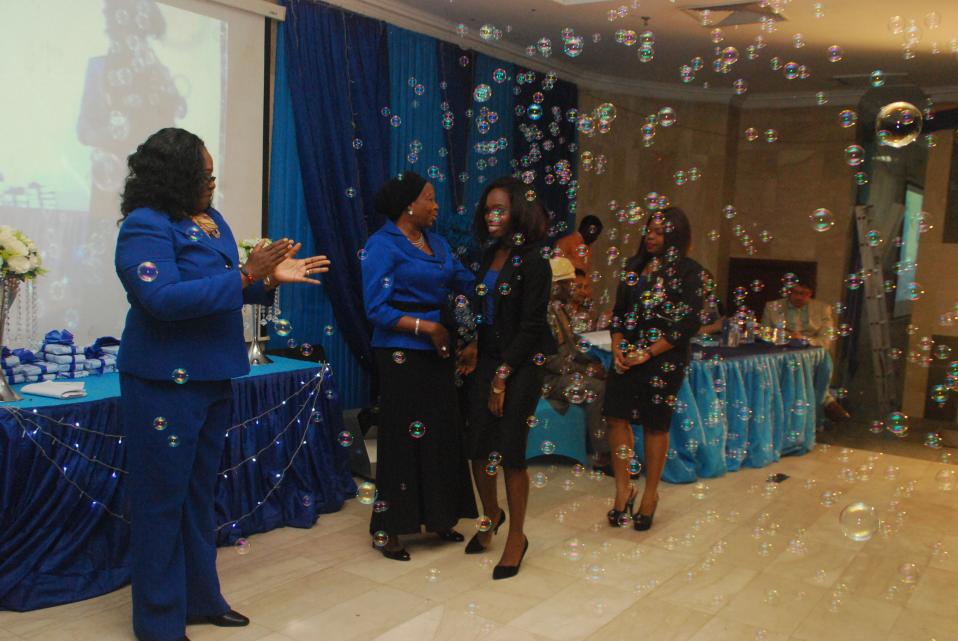
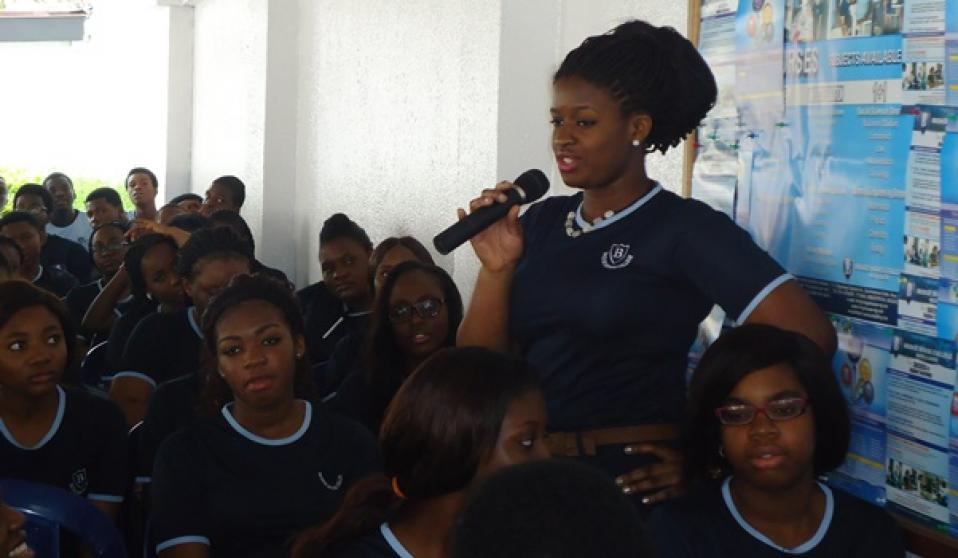
Highly distinguished speakers are invited intermittently to speak with the students on various topics including the essence of vision and discipline, setting goals to achieve success etc.
BHC students also develop their communications skills by participating in such seminars as assistants or moderators.
Extra-Curricular
At BHC we involve our students in a number of activities outside academia to ensure that they acquire the right mental balance required in life.
Each year, BHC students go out to the orphanages.
Regular sporting competitions are held involving both the tutors and the students.
As fitness is an essential part of brain development, all students in the hostels exercise on Saturday mornings.
Students also take part in religious activities. Muslims on Fridays, Christians on Sunday. Our students are also involved in church activities; some singing in the choir, others playing instruments or participating in the church’s youth activities.
Parents
At Bridge House College our parents are important to us. We ensure that every parent/guardian is involved with every step of the career decision of their ward(s) while still making sure that final career decisions are what the students are really passionate about.
Parent Forums are organised on various dates within the term where parents are given review on the state of our facilities, improvements made. At such forums, parents are educated on areas in which they could assist the school in bringing out the best in each student. Every teacher is made accessible to the parents for enquiries on the student’s welfare and academic performance.
Academic Calendar
Bridge House College has start dates in September. Late entry for the UFP programme is in January.
Every candidate is expected to take and pass an entry examination before being admitted into any of our programmes.
Boarding
At BHC we ensure that every student residing outside Lagos is provided with accommodation.
Our policy is to have a “HOME AWAY FROM HOME” life and this is exhibited in all facets of the Boarding experience at BHC. Students are housed in comfortable and secure accommodation under the supervision of trained and experienced house parents, who are responsible for their day to day pastoral care and who provide students with the best guidance and direction, in preparation for life outside school.
Each hostel is equipped with a common room for relaxation in the evenings and at weekends. In this setting, students learn to form lasting relationship, develop productive habits and improve on the quality of their own learning.
Presently, the college has five hostels with standby soundproof generating sets and 7.5KVA Inverter in each hostel.
Visit BHC
BHC’s campus site is always open to potential parents who would like to assess where their ward(s) would be studying. You could contact us at the address below:
